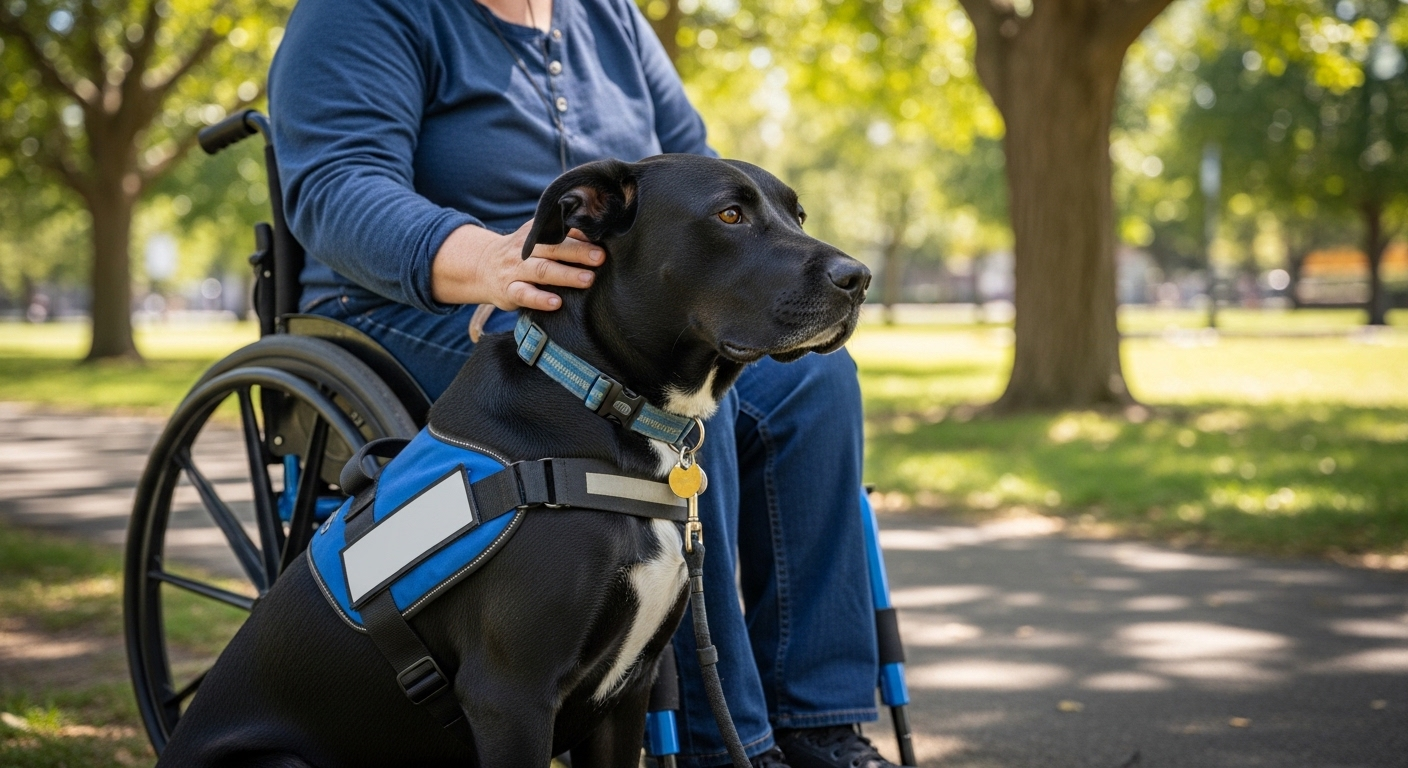
Yes, a Black Mouth Cur can be trained as a service dog but only in the right circumstances. The Black Mouth Cur is an intelligent, hardworking breed originally developed for hunting and farm labor. These traits make some individuals capable of learning the complex tasks required for service work. However, their high energy levels, strong prey drive, and need for structured training mean they are not a universal fit for every service dog role.
For individuals pursuing a psychiatric service dog, obtaining a PSD letter from a licensed mental health professional is the essential first step in establishing legal documentation for disability-related need. Understanding the full scope of psychiatric service dog rights and responsibilities helps handlers prepare for what service work entails before committing to a breed like the Black Mouth Cur. Those who rely on an emotional support animal alongside their service dog should also keep ESA letter renewal current so housing protections remain valid year-round.
This guide covers when a Black Mouth Cur may succeed as a service dog, what disabilities the breed is best suited to assist with, the training requirements involved, and the challenges handlers should understand before making this choice.
Understanding the Black Mouth Cur: Origins and History
The Black Mouth Cur originated in the southeastern United States during the 18th century. European settlers brought various working dogs to Mississippi, Tennessee, and surrounding regions terriers, hounds, and herding breeds from Ireland, Scotland, England, and France. Families in the rural South needed versatile working dogs, and the Black Mouth Cur evolved to meet these demands. They hunted game ranging from squirrels to wild boars, herded livestock, and protected homesteads from predators and intruders.
The breed remained largely unknown outside the South for generations, with different family lines developing distinct characteristics. The Ladner, Southern, Weatherford, Foundation, and Howard lines became well-regarded bloodlines, each kept for over 150 years. In 1998, the United Kennel Club officially recognized the Black Mouth Cur. The breed's name comes from the distinctive black pigmentation around their muzzle some experts believe it also refers to their darker-colored gums and lips.
Breed Characteristics and Physical Traits
Understanding the Black Mouth Cur's physical and behavioral traits is essential before exploring their service dog potential. These characteristics directly impact their ability to perform service work and determine which handlers they suit best.
Appearance and Size: Black Mouth Curs are medium to large dogs with athletic, muscular builds. Males typically weigh between 40 and 95 pounds and females are usually 10 pounds lighter. They stand 16 to 25 inches tall at the shoulder. Their coat is short and can be fine or coarse, with colors including yellow, fawn, red, brown, black, and brindle patterns. Small white markings may appear on the chest, feet, or tail tip.
Temperament and Personality: These dogs are intelligent, loyal, and protective, bonding strongly with their families. Their working dog heritage makes them naturally task-oriented, and they possess strong prey drives from generations of hunting work. Black Mouth Curs are fearless and confident, remaining alert to their surroundings. They can be wary of strangers but affectionate with family members. The breed shows sensitivity to their owner's emotions and responds well to positive reinforcement harsh training methods can damage their trust and willingness to work. For handlers comparing this breed's emotional attunement to that of dedicated ESA breeds recommended for ADHD, the Black Mouth Cur's focus and responsiveness makes a compelling case for those with attention-related conditions.
Energy Levels and Exercise Needs: This breed requires substantial daily exercise at least 60 to 90 minutes of physical activity. Without adequate exercise, they may develop destructive behaviors. Mental stimulation is equally important, as these intelligent dogs need engaging activities like puzzle toys, scent work, and training sessions to keep their minds sharp.
Strengths of Black Mouth Curs as Service Dogs
Several characteristics make them suitable candidates for service work. Their intelligence and trainability allow them to learn commands quickly and retain training well. Their eagerness to please motivates them during sessions. Centuries of working alongside humans created a strong task orientation they focus on assigned duties with dedication, which is essential for service dog work. These dogs form deep attachments to their handlers, remaining attentive to their person's needs, and their history as multi-purpose working dogs created remarkable adaptability that allows them to learn various tasks for different disabilities. Their natural bravery helps them handle stressful environments without easily startling or becoming fearful a critical quality for service work in unpredictable public settings.
Service Dog Tasks They Can Perform
Black Mouth Curs can be trained for numerous service dog roles. Their size and strength allow them to provide physical support for mobility assistance, including help with balance, retrieving dropped items, and pulling wheelchairs. Their attentiveness makes them excellent at detecting medical changes they can alert to seizures, low blood sugar, or heart rate changes, and some can sense these conditions before visible symptoms appear.
As psychiatric service dogs vs ESAs, their emotional sensitivity suits task-based psychiatric work well they can perform grounding techniques during anxiety attacks, remind handlers to take medications, and create space in crowded areas for handlers with PTSD. Their natural alertness also helps with hearing assistance, notifying deaf handlers of doorbells, alarms, or approaching people. For autism support, their protective nature and loyalty benefit both children and adults by helping prevent wandering, providing calming pressure therapy, and reducing anxiety in overwhelming situations.
Training Requirements for Black Mouth Cur Service Dogs
Training a Black Mouth Cur as a service dog requires dedication, patience, and understanding of the breed's unique characteristics. The training process involves multiple stages, each building upon the previous foundation.
Basic Foundation Training:Service dog training begins with fundamental obedience. The dog must master basic commands reliably sit, stay, down, come, and heel ideally starting during puppyhood. Black Mouth Curs need firm but gentle guidance, responding poorly to harsh corrections. Positive reinforcement techniques using treats, praise, and play motivate them most effectively.
Socialization Is Critical: Early socialization is extremely important for this breed given their strong territorial instincts and protective tendencies. Without proper socialization, these traits can become problematic in service settings. Exposing puppies to various people, animals, sounds, and environments helps them remain calm in public settings where service dogs must ignore distractions while working. Black Mouth Curs may show aggression toward unfamiliar dogs without socialization a behavior completely unacceptable for service animals that extensive early socialization prevents.
Specialized Task Training: After mastering basic obedience, training moves to disability-specific tasks. Under ADA requirements, these tasks must be trained behaviors not natural instincts. According to the International Association of Assistance Dog Partners (IAADP), service dogs should receive a minimum of 120 hours of training spanning six months or longer, with about 30 hours occurring in public settings with various distractions. While certification is not legally required, following established training standards significantly increases success rates.
Public Access Training: Service dogs must behave appropriately in all public places, requiring extensive training in various environments. The dog must ignore food, other animals, and people while working, walk calmly on a leash without pulling, remain quiet unless alerting to a problem, and lie quietly under tables in restaurants. Black Mouth Curs can struggle with public access training initially due to their high energy and protective instincts, but consistent training and patience overcome these challenges over time.
Challenges of Training Black Mouth Curs as Service Dogs
While Black Mouth Curs have many qualities that support service work, they also present specific challenges. Understanding these obstacles helps potential handlers decide whether this breed is the right choice when looking to get a service dog.
High Energy Levels: The breed's energy can be challenging for service work since service dogs must remain calm and focused for extended periods. Handlers must provide adequate exercise before outings a tired dog focuses better. Without sufficient exercise, the dog may become restless or distracted in exactly the situations where calm focus matters most.
Prey Drive: The strong prey drive can create problems in public. Squirrels, birds, and cats may trigger chasing instincts that are dangerous when the dog should be focusing on their handler. Training must specifically address impulse control, requiring consistent practice and a strong foundation before public access work begins.
Protective Instincts: Black Mouth Curs naturally protect their families. While valuable in some contexts, service dogs cannot show aggression toward strangers approaching their handler. Extensive socialization helps manage protective behaviors, teaching the dog to distinguish between actual threats and normal interactions through careful, ongoing training.
Dog Aggression: Some Black Mouth Curs show aggression toward unfamiliar dogs behavior completely unacceptable for service animals that must remain calm around other dogs in public. Early socialization with many dogs helps prevent this issue. If dog aggression develops, it may disqualify the dog from service work entirely. For handlers considering whether a different kind of animal support might be more practical, understanding the broader benefits of emotional support animals helps clarify whether full service dog work is the right path.
Legal Rights with a Black Mouth Cur Service Dog
Black Mouth Curs have full legal protection under the Americans with Disabilities Act when trained as service dogs. The ADA does not restrict service dogs by breed a Black Mouth Cur has the same rights as a Labrador Retriever or German Shepherd. No certification or registration is required, businesses can only ask two specific questions about the service dog, the dog must be under control and well-behaved at all times, and breed discrimination is not permitted under federal law. Handlers who face housing-related questions about their service dog should also be familiar with Fair Housing Act, as these govern residential accommodations separately from ADA public access rights.
Comparing Black Mouth Curs to Traditional Service Dog Breeds
When considering a Black Mouth Cur for service work, comparing them to established service dog breeds provides valuable perspective. Labrador Retrievers, Golden Retrievers, and German Shepherds dominate service dog work due to their calm temperaments and high trainability. Standard Poodles and Rough Collies also work well with their intelligence and even temperaments.
Black Mouth Curs match traditional breeds in intelligence and loyalty and can perform the same tasks with proper training. Their versatility from working dog backgrounds serves them well. However, they require more intensive training than traditional breeds their energy and prey drive need extra management, and their protective instincts require careful socialization. Traditional breeds may be easier choices for first-time service dog handlers, while Black Mouth Curs suit experienced trainers who appreciate the breed's unique qualities and are willing to invest in the extended training process.
Steps to Train a Black Mouth Cur as a Service Dog
Step 1: Evaluate Temperament. Not every Black Mouth Cur makes a good service dog the individual dog's temperament matters more than breed alone. Ideal candidates are calm and confident in new situations, friendly or neutral toward strangers and other dogs, eager to please and responsive to training, not easily distracted or startled, and physically healthy and sound. Fearful, aggressive, or extremely high-strung dogs rarely succeed as service animals.
Step 2: Establish Basic Obedience. Start with fundamental commands that the dog must respond to reliably. Practice in various environments with increasing distractions using positive reinforcement consistently. Keep training sessions short and engaging to maintain motivation and focus.
Step 3: Socialize Extensively. Expose the dog to diverse situations different locations including stores, restaurants, and public transportation, people of all ages and appearances, and controlled meetings with friendly dogs. Continue socialization throughout the dog's entire working life, not just during puppyhood.
Step 4: Teach Specific Tasks. Identify tasks that help with the specific disability, break each task into small steps, train each step separately before combining them, and practice tasks in various settings. The dog must perform reliably regardless of location or distractions.
Step 5: Practice Public Access. Gradually introduce the dog to public settings starting with quiet locations and building to busier environments. The dog should walk politely on a leash, ignore food, people, and other animals, and respond immediately to commands. For handlers curious about how service dog public access rules differ across different situations, reviewing emotional support animal vs service animal distinctions clarifies what access rights apply where.
Step 6: Maintain Ongoing Training. Service dog training never truly ends. Continuing to practice commands and tasks regularly maintains skills and prevents regression. Periodically introducing new environments keeps the dog adaptable and confident, and addressing any behavior issues immediately prevents small problems from becoming disqualifying ones.
Health Considerations for Black Mouth Cur Service Dogs
Black Mouth Curs are generally healthy dogs, but they can develop certain health issues that may affect their ability to work as service dogs. Hip dysplasia can cause pain and mobility issues that limit a dog's ability to perform physical tasks. Elbow dysplasia similarly affects the front legs and can reduce the dog's working lifespan. Cataracts may develop as the dog ages, affecting vision-dependent tasks. Their floppy ears can trap moisture and debris, making regular cleaning essential to prevent infections. Skin conditions like mange occasionally affect the breed and require veterinary treatment.
Screening potential service dog candidates for genetic issues including hip and elbow evaluations and eye examinations helps predict future problems before significant training investment is made. Regular veterinary checkups maintain the service dog's health and allow any issues to be addressed promptly before they affect work performance. Black Mouth Curs typically live 12 to 15 years, but service dog work is physically and mentally demanding, with most service dogs working 8 to 10 years before retiring. Planning for eventual retirement ensures the dog receives a comfortable life after years of dedicated service.
When to Consider Alternative Breeds
Black Mouth Curs may not be the best choice for everyone. Alternative breeds deserve consideration for handlers who have no prior experience training dogs, cannot provide extensive daily exercise, need a smaller or calmer dog, live in a small apartment, require a hypoallergenic breed, or cannot handle potential dog aggression issues. Traditional service dog breeds typically suit first-time handlers better with their even temperaments and lower energy. For those exploring whether a full service dog is necessary at all, understanding how to qualify for an emotional support animal may reveal that ESA housing protections meet the need without the demands of full service dog training.
Black Mouth Curs can absolutely be trained as service dogs. Their intelligence, loyalty, and task-oriented nature make them capable partners that excel at various service dog roles when properly trained. However, this breed requires more extensive training than traditional service dog breeds their high energy, prey drive, and protective instincts need careful management, and they suit experienced dog trainers willing to invest significant time and effort. For the right handler, a Black Mouth Cur service dog offers unique advantages. Their versatility, strength, and deep bonds with handlers create powerful partnerships, proving that successful service dogs come in many breeds. Honestly assessing capabilities, experience level, lifestyle, and specific needs in consultation with professional trainers and healthcare providers leads to the best decision for both handler and dog.
Frequently Asked Questions
Can a Black Mouth Cur be a psychiatric service dog?
Yes, Black Mouth Curs can be trained as psychiatric service dogs. Their emotional sensitivity, strong bonding with handlers, and task-oriented nature suit psychiatric service work well. They can perform grounding techniques during anxiety attacks, remind handlers to take medications, and provide deep pressure therapy. A valid PSD letter from a licensed mental health professional is required to document the disability-related need for this type of service animal.
Do Black Mouth Curs need special certification to be service dogs?
No, the ADA does not require service dogs to hold any certification or registration. Businesses may only ask two questions: whether the dog is a service animal required because of a disability, and what work or task the dog has been trained to perform. Breed-specific certification schemes found online are not legally recognized and are not required for any service dog regardless of breed.
How long does it take to train a Black Mouth Cur as a service dog?
Training a Black Mouth Cur as a service dog typically takes 18 months to 2 years or longer. The IAADP recommends a minimum of 120 hours of training with at least 30 hours in public settings. Due to the breed's high energy and prey drive, expect the timeline to be on the longer end compared to traditional service dog breeds like Labrador Retrievers.
Are Black Mouth Curs good emotional support dogs?
Yes, Black Mouth Curs can make excellent emotional support animals for the right individual. Their loyalty, deep bonding with handlers, and sensitivity to human emotions make them naturally comforting companions. Unlike service dog work, ESA status does not require task training it requires an ESA Letter from a licensed mental health professional confirming that the animal provides therapeutic benefit for a diagnosed condition.For readers in California, understanding stricter compliance laws like California ESA Letters: Complete Guide to AB 468 Requirements is especially important, as the state enforces additional rules around ESA evaluations and documentation timelines.
What disabilities are Black Mouth Curs best suited to assist with?
Black Mouth Curs are best suited for mobility assistance, medical alert work, psychiatric service roles, hearing assistance, and autism support. Their strength makes them capable mobility partners, their attentiveness supports medical detection tasks, and their emotional sensitivity and loyalty make them effective for psychiatric and autism-related support roles. They are less suited for guide dog work or roles requiring extremely calm, low-energy temperaments in constant public settings.